 EN
Why the feed is so easy to keep watching
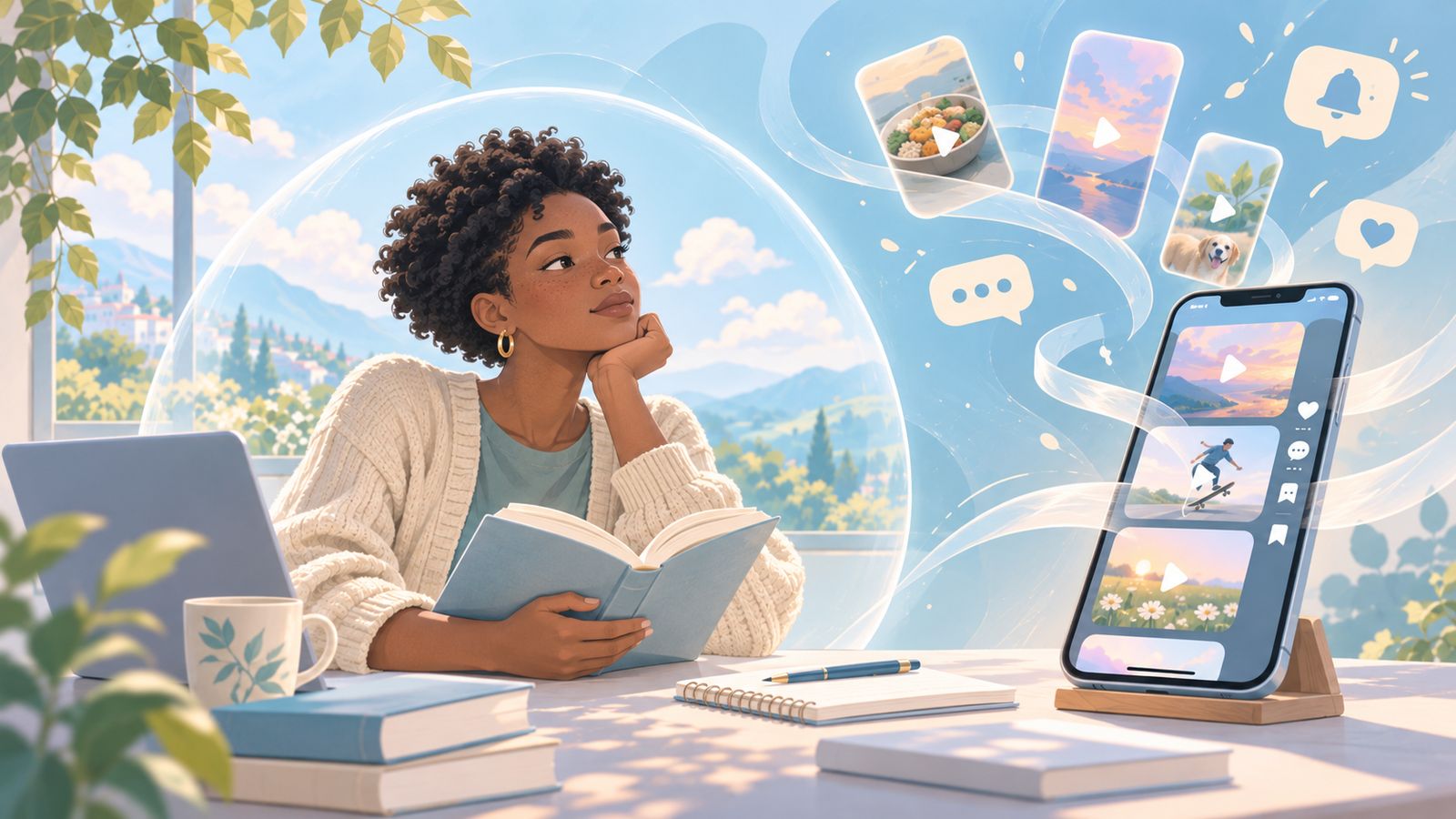
You open an app for five minutes. One clip ends and another begins, then another. There is no need to choose a film or search for a topic: something new arrives automatically. Endless scrolling makes continuing easier than deciding to stop.
The problem is not that a video lasts twenty seconds. Short clips can teach, entertain and explain. The interesting question is what happens when an endless feed starts replacing activities that require sustained attention.
What researchers have actually found
A 2025 meta-analysis combined 71 studies involving almost 100,000 participants. Greater short-form video use was associated, on average, with poorer performance on some cognitive measures, especially attention and inhibitory control, which is the ability to hold back an automatic response.
The important word is “associated”. Many studies relied on self-reported viewing habits and cross-sectional data. That means we cannot confidently tell whether the videos made concentration worse. People who already struggle to sustain attention might simply find this format more appealing.
Myth: short clips permanently damage the brain
Neither the meta-analysis nor observational studies establish that TikTok, Reels or Shorts cause irreversible brain damage. Claims about “destroyed neurons” or “digital dementia” are much stronger than the evidence supports.
More recent research also distinguishes ordinary use from problematic use, such as when scrolling becomes difficult to control and interferes with sleep, work or relationships. Total screen time is only one part of the story.
Why a book can feel slow after scrolling
A feed changes stimuli every few seconds. Reading a chapter requires you to remember earlier sentences, follow an argument and stay with one task when nothing new flashes onto the screen. After a rapid stream of novelty, reading may feel slower. That subjective contrast does not prove a permanent loss of attention.
Sleep deprivation, stress, frequent notifications and multitasking also affect concentration. Blaming one platform for every distraction overlooks these other factors.
Building healthier digital habits
Before opening an app, decide what you want from it: a few selected clips or a break. Turn off nonessential notifications, and give demanding tasks a stretch of time without interruptions. Enjoying videos is not automatically a problem; being able to choose when to stop matters.
Try a modest personal experiment. Compare a week of unplanned scrolling with a week when you choose viewing times. Notice practical outcomes such as sleep, interrupted work, completed tasks and mood, rather than asking whether your brain has become “smarter”.
The takeaway
Short-form video deserves careful research, but science does not support the simplistic headline that TikTok makes everyone less intelligent. A more useful conversation is about habits, context and the ability to direct your attention.
Sources and further reading
- Nguyen et al. (2025), Short-form video use: systematic review and meta-analysis
- Short-form video and mental health meta-analysis (2026)
This article is for information only and is not a substitute for medical advice.